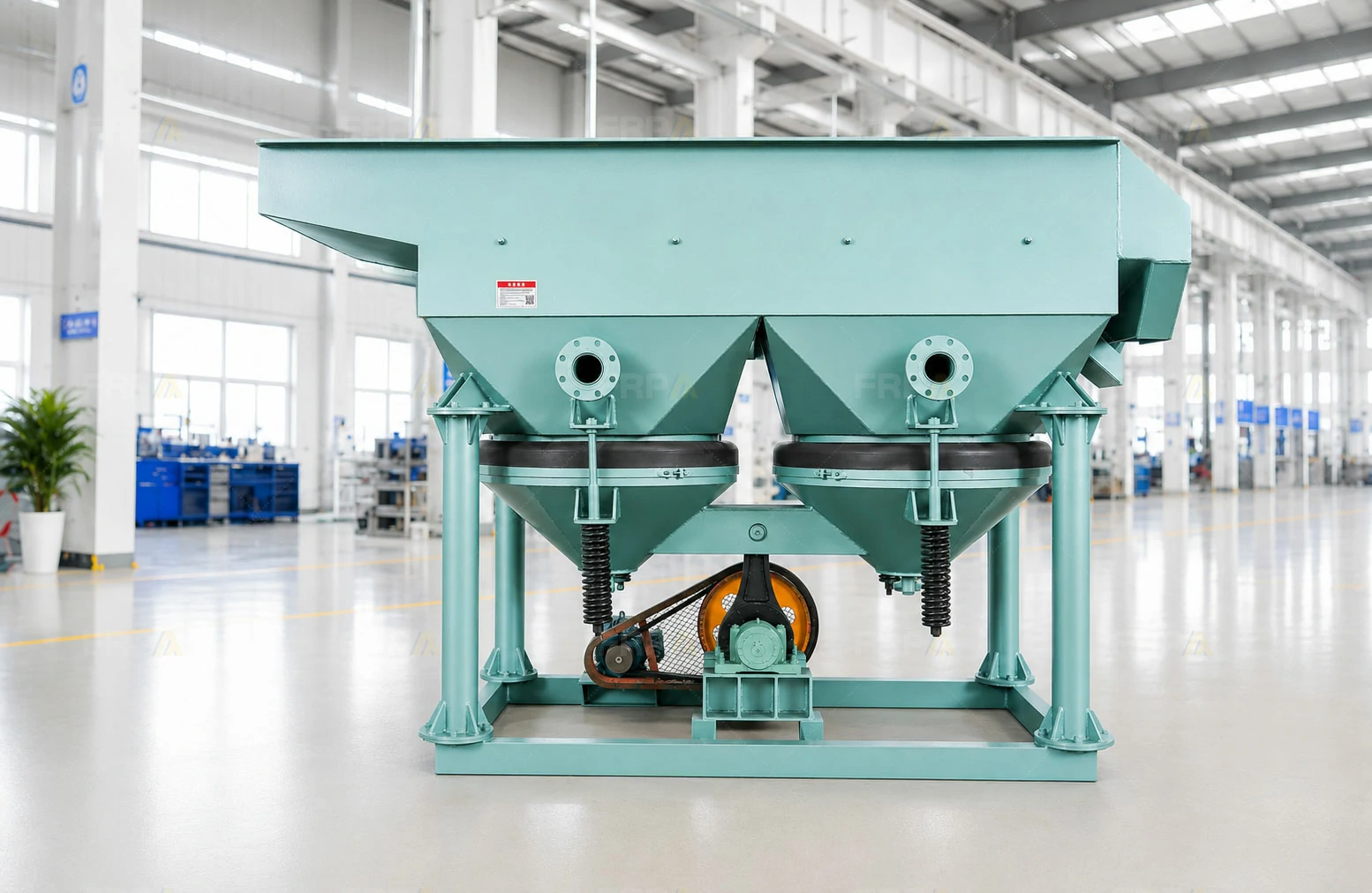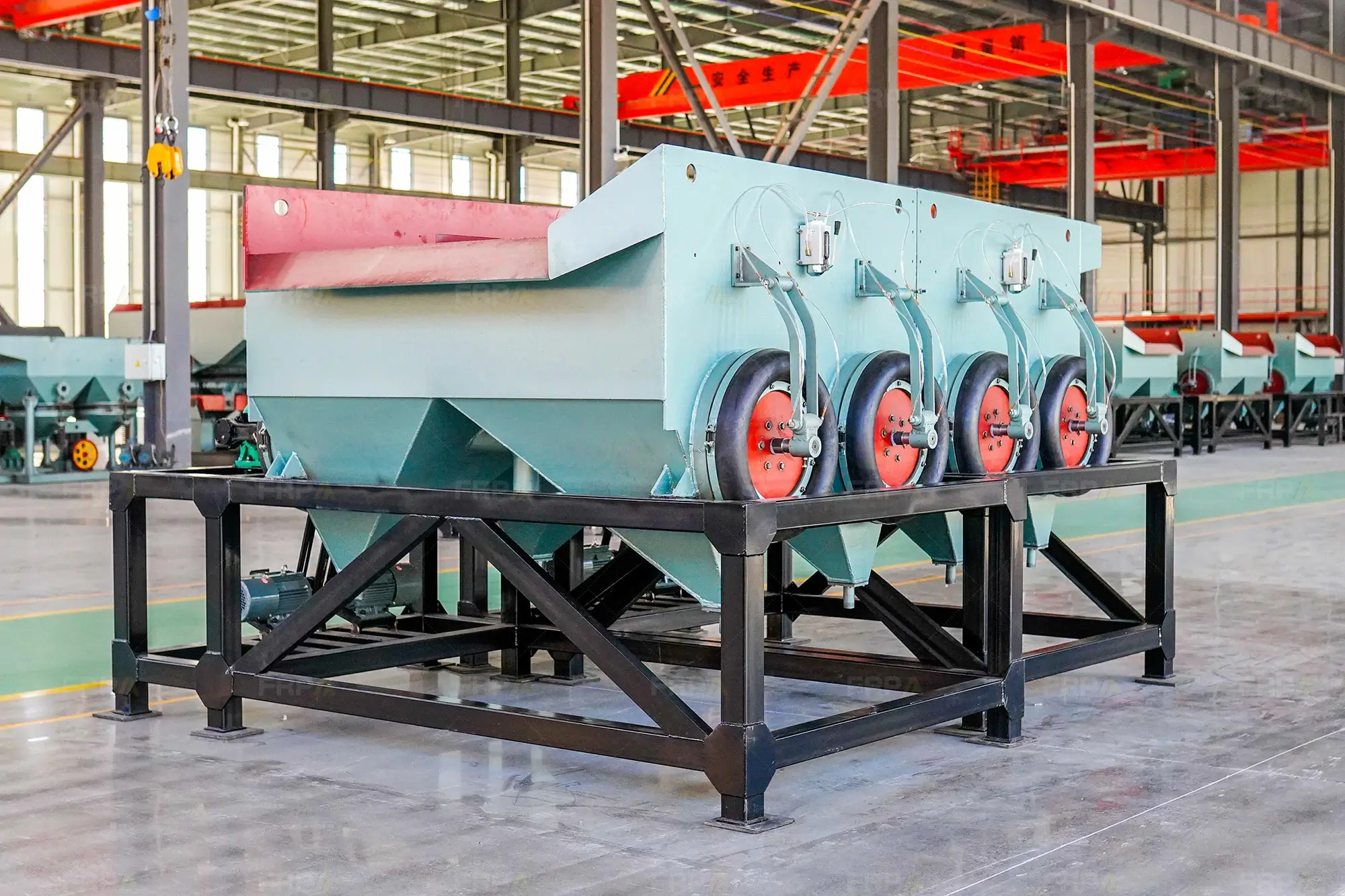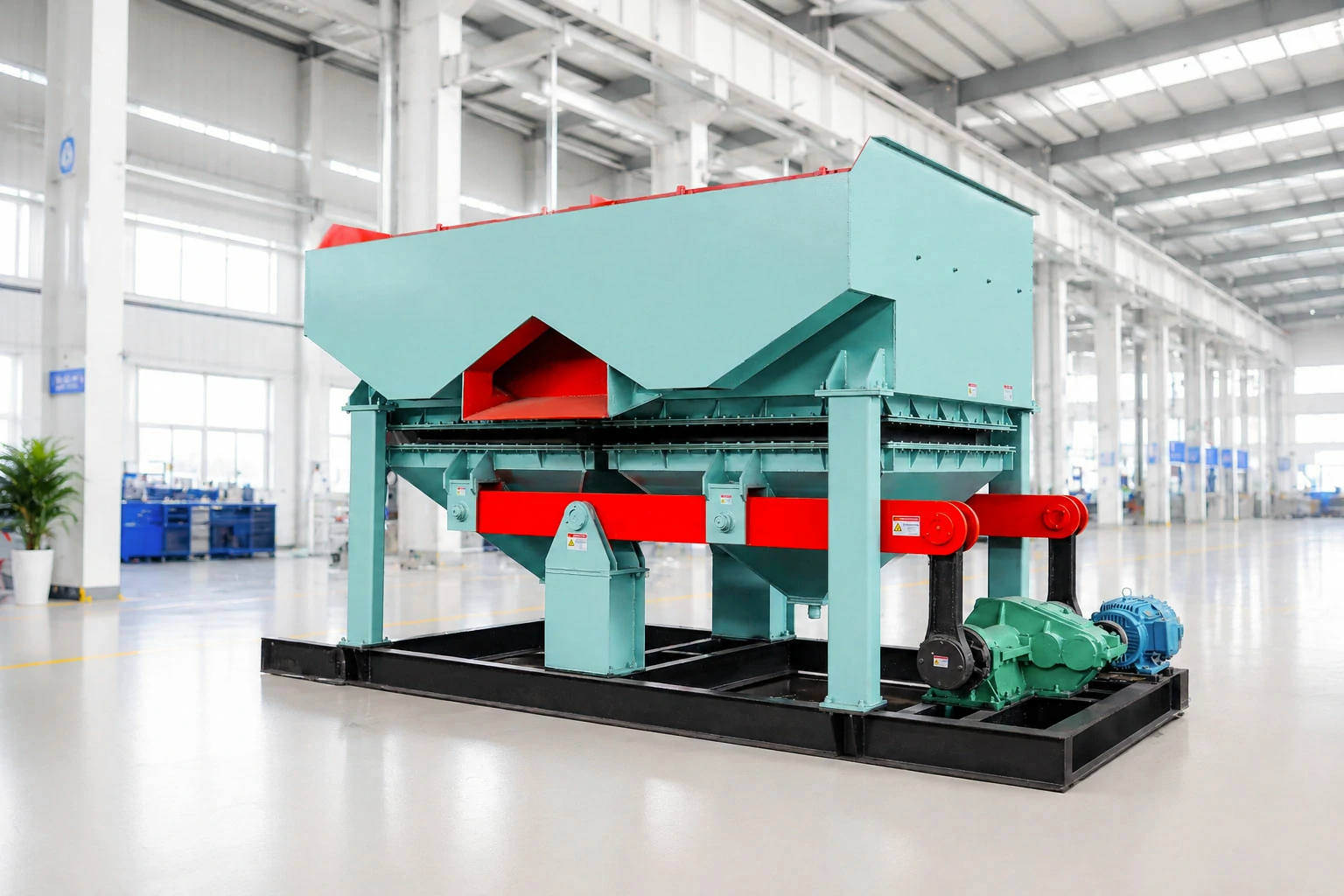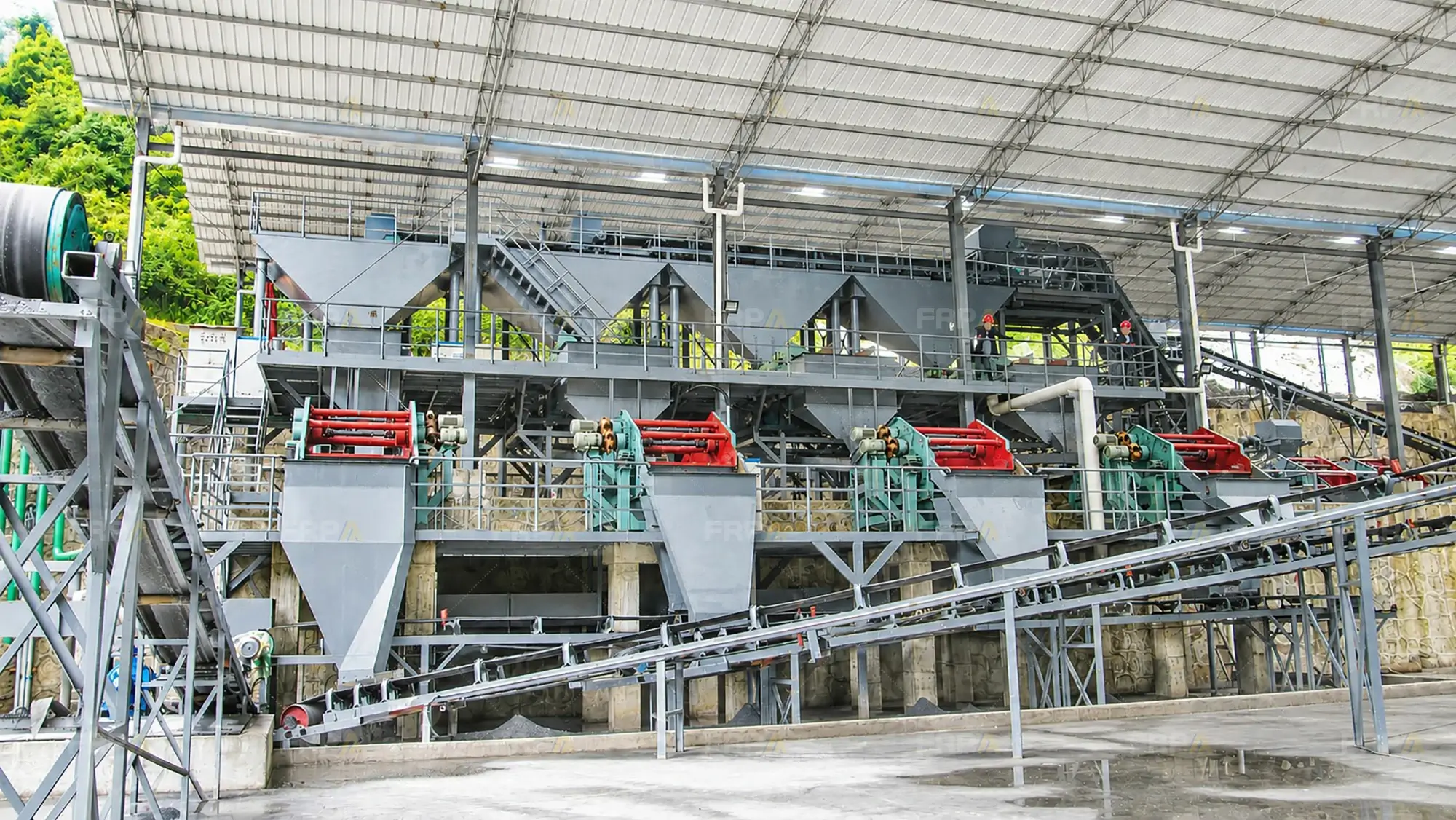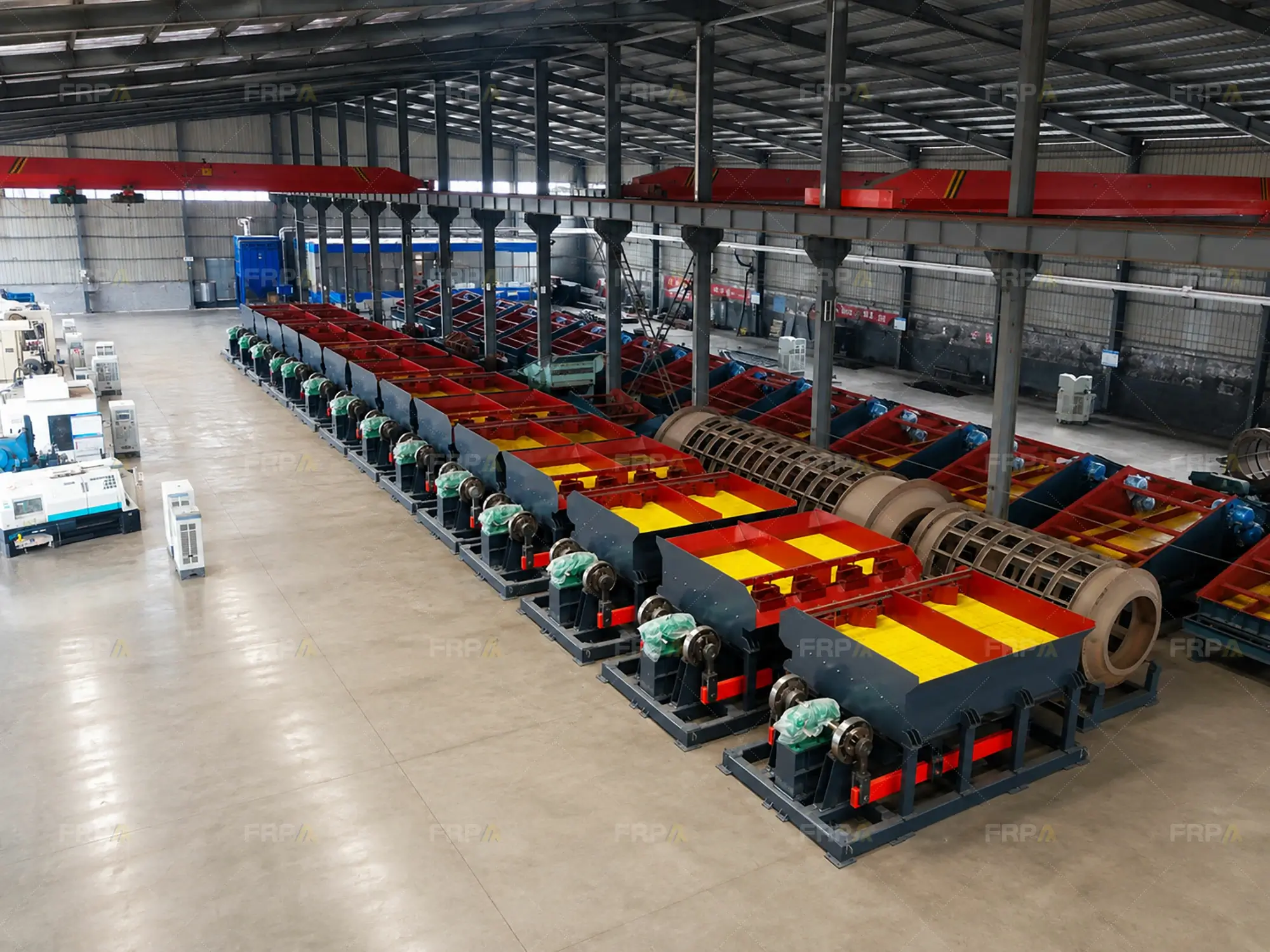





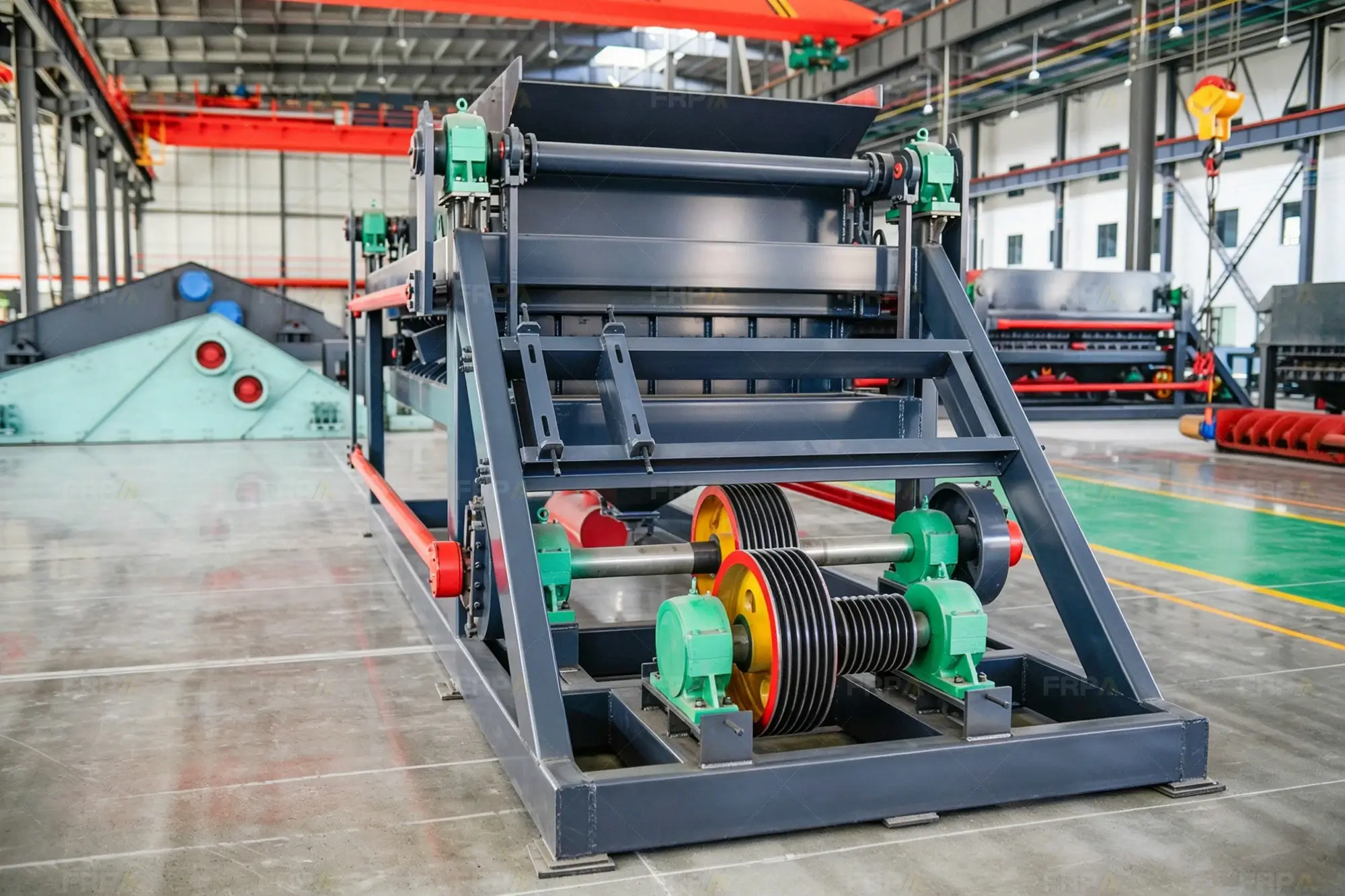
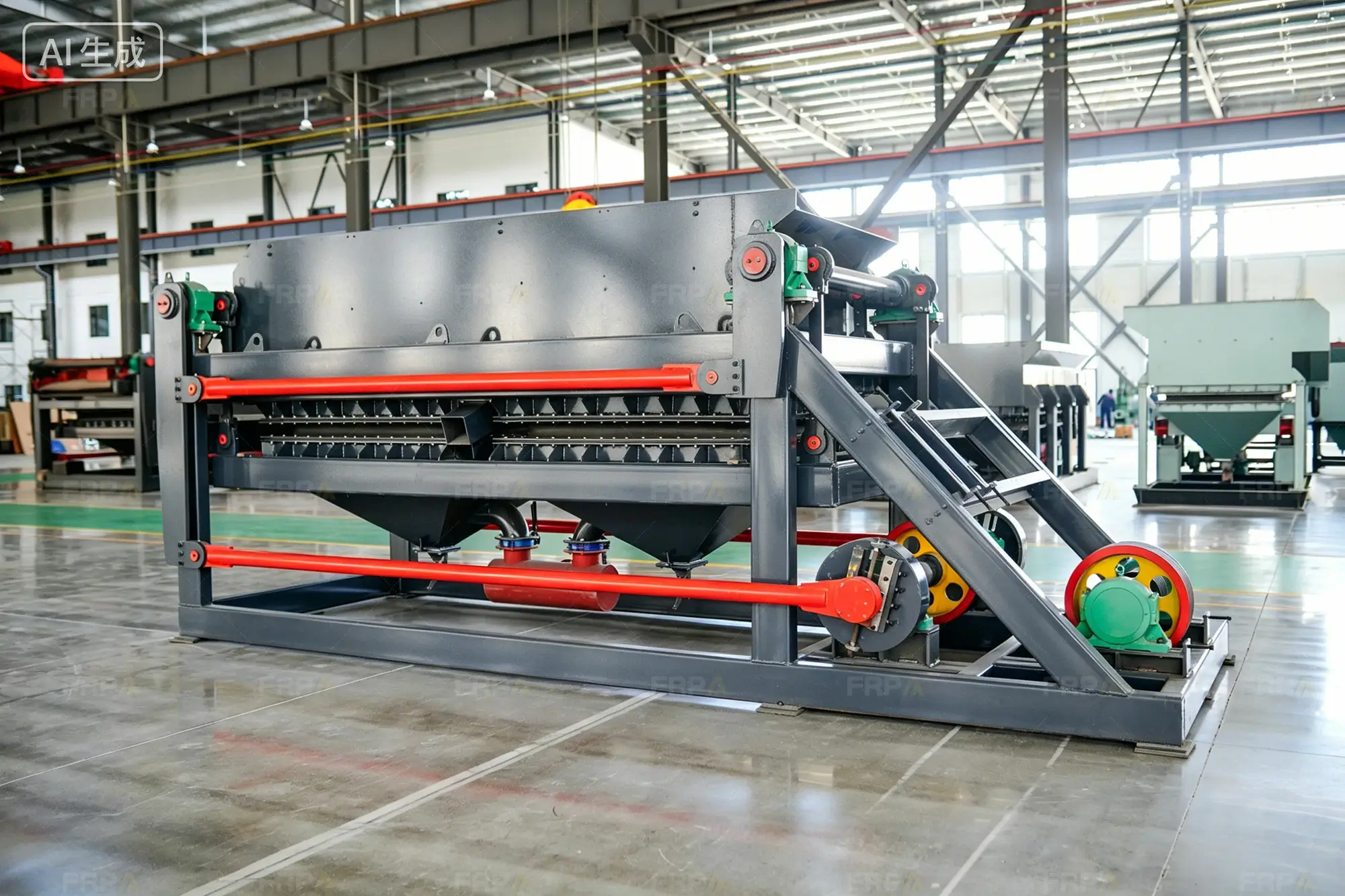
The FFD Compound Double-Action Jig Concentrator features a unique dual-motion system where the upper and lower sections move simultaneously in opposite directions. This generates a stronger, more stable pulsating water flow that promotes controlled bed expansion and re-stratification, effectively preventing bed compaction when processing wide-size-range feeds.
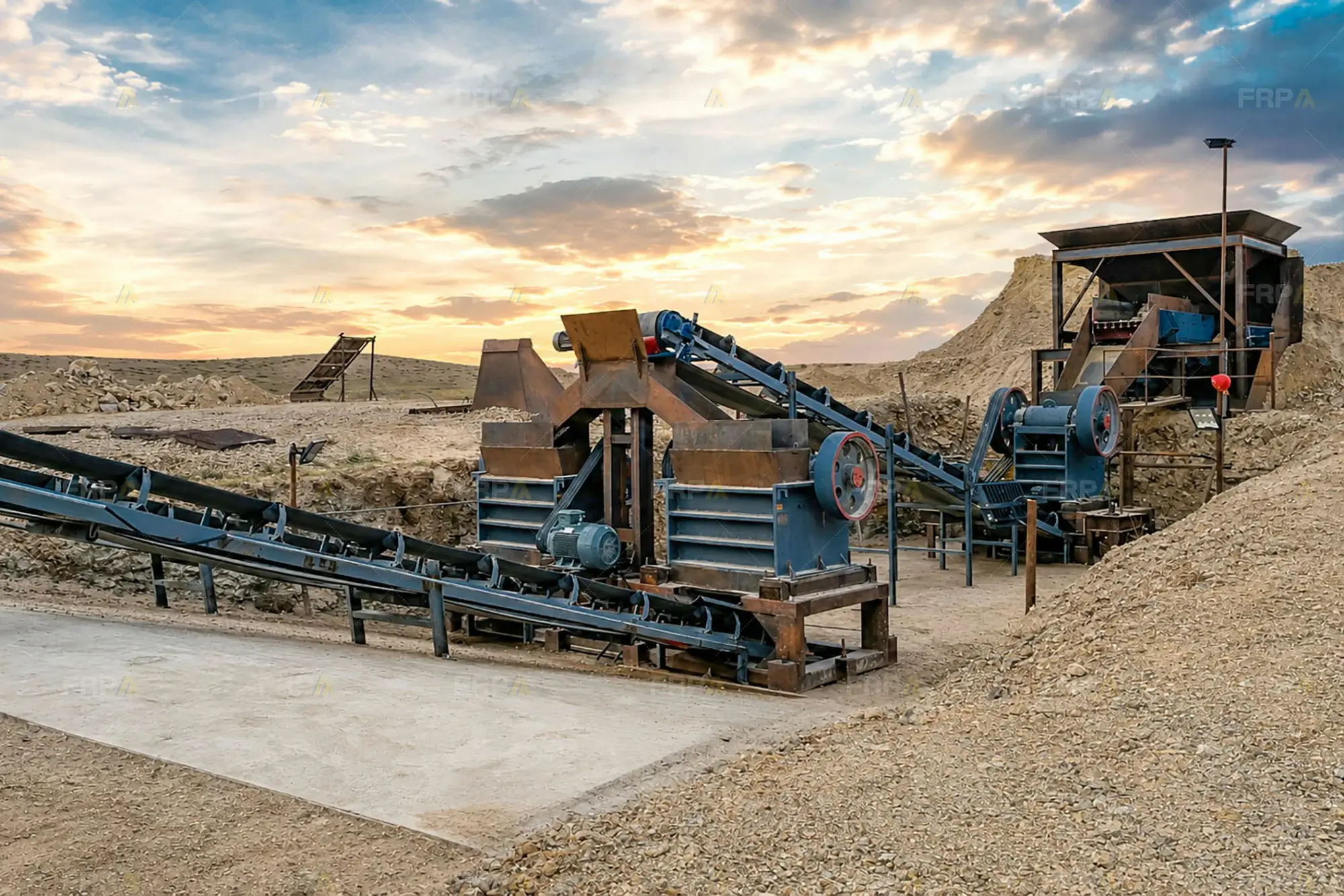
Compared with conventional jigs, the FFD requires less process water, accepts larger feed particles (up to 50 mm), and delivers a higher throughput of 80–100 tph. These capabilities make it particularly suitable for large-scale mining operations.
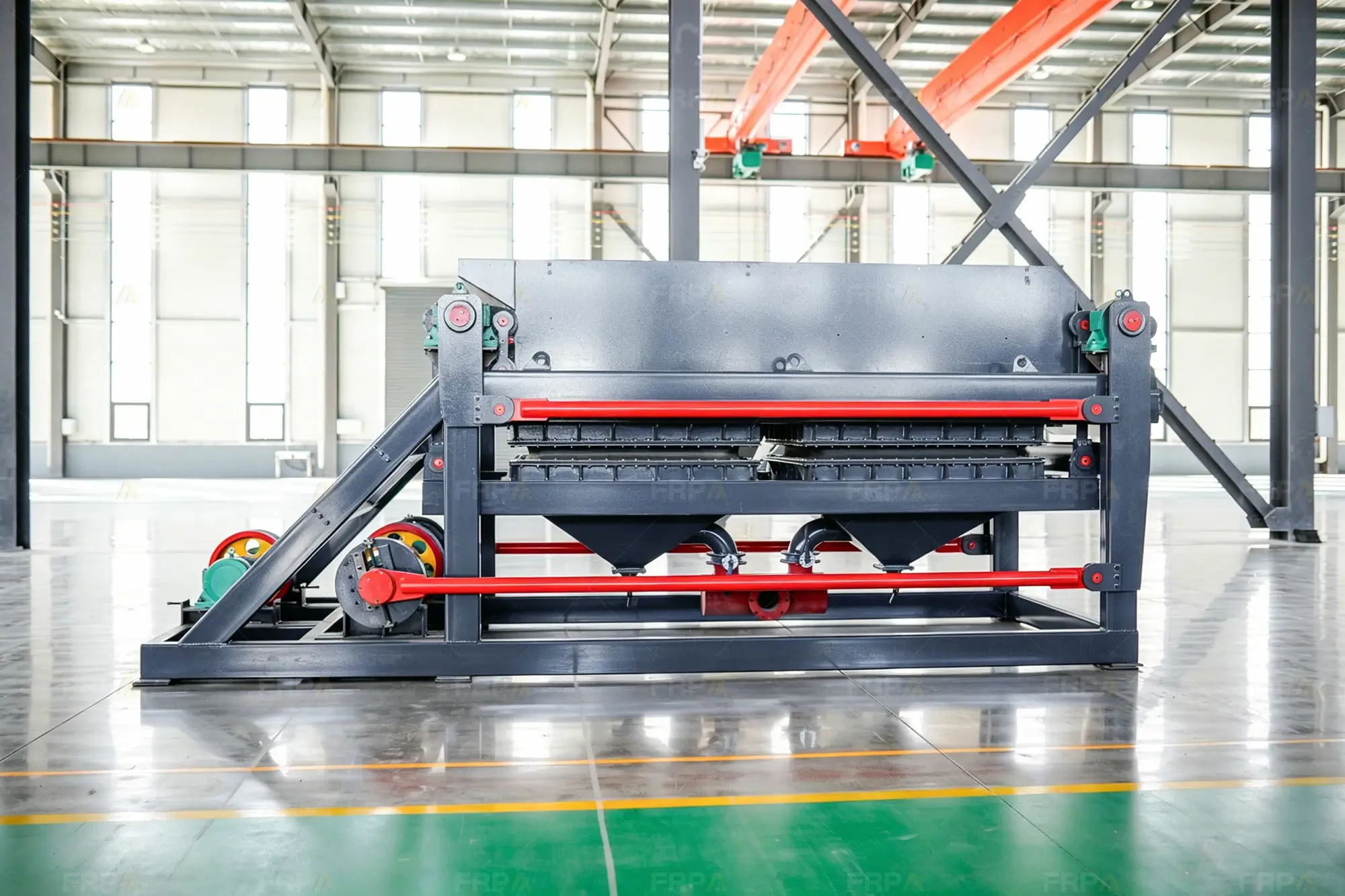
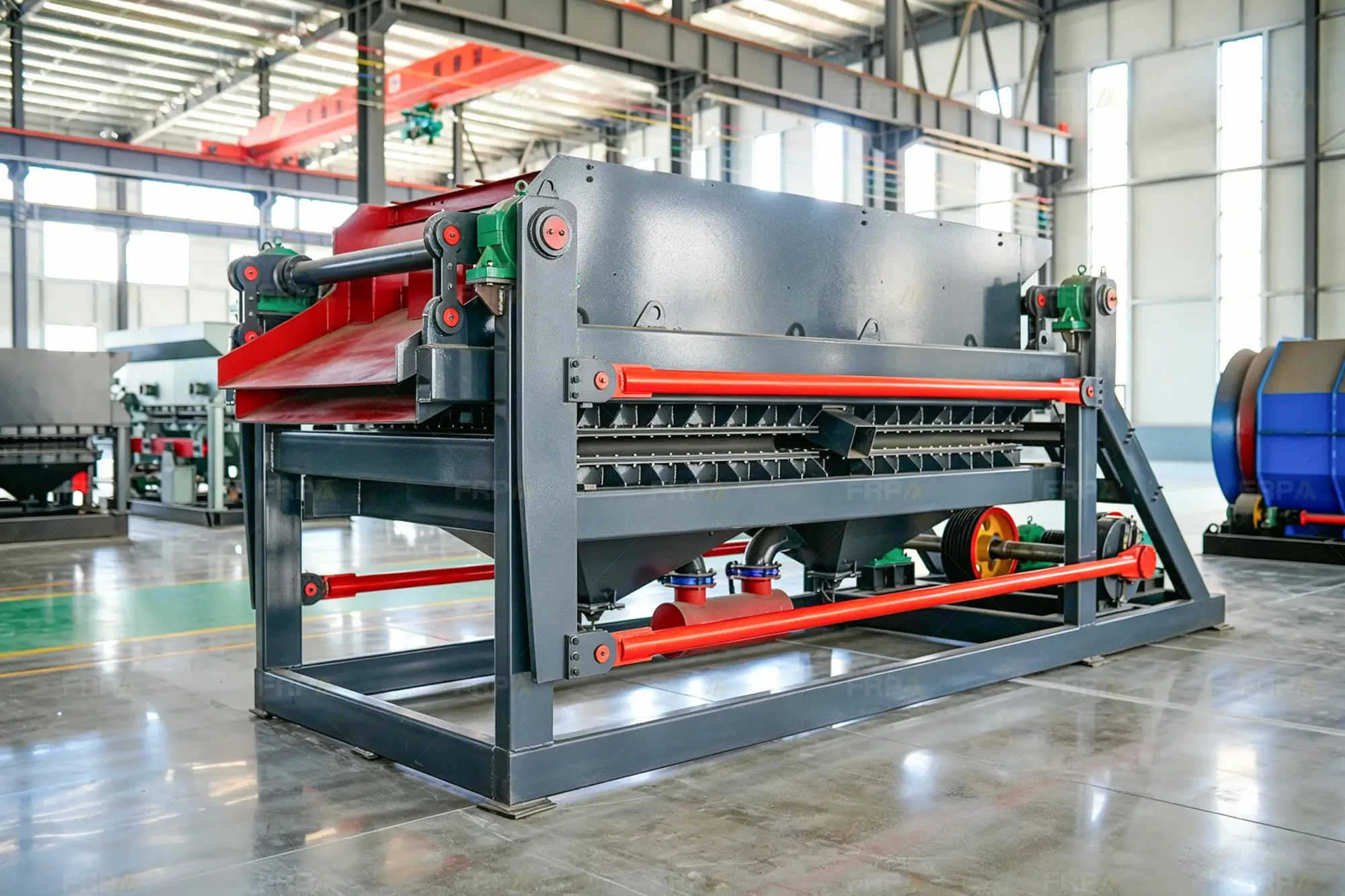
The FFD Compound Double-Action Jig Concentrator operates through the coordinated vertical opening-and-closing motion of its upper and lower moving assemblies. A flexible rubber diaphragm provides a sealed connection between the moving upper jigging chamber and the lower conical hutch. As the two assemblies reciprocate, they generate an alternating vertical force in the water column.
When the upper and lower assemblies move toward each other, an upward water flow passes through the screen deck and expands the material bed, allowing the particles to loosen and rearrange. When the assemblies move apart, a downward suction flow draws the bed toward the screen. During this suction phase, high-density particles settle faster than low-density particles, causing the material to stratify according to density.
After stratification, fine heavy particles pass through the screen into the lower conical hutch and are discharged through the fine-concentrate outlet into the fine-concentrate collection sump. Coarse heavy particles remain above the screen and form a natural ragging bed. When this bed exceeds the required thickness, the excess material is discharged through the oversize-concentrate outlet into the coarse-concentrate collection sump. The concentrate grade can be controlled by adjusting the thickness of the coarse-particle bed. Light minerals and waste rock are discharged through the tailings outlet above the screen.
FAQ for FFD jig concentrator
The main difference lies in the motion and pulsation system. A conventional diaphragm jig concentrator generally uses a diaphragm to generate pulsating water flow beneath a stationary jigging screen. In the FFD Compound Double-Action Jig Concentrator, the upper jigging chamber and lower conical hutch move simultaneously in opposite directions. This compound motion combines screen movement with water pulsation, producing more stable bed expansion, settling and stratification.
The FFD Compound Double-Action Jig Concentrator is specifically designed to recover both coarse and fine heavy minerals. Fine heavy minerals pass through the screen deck into the lower conical hutch and are discharged through the underflow concentrate outlet. Meanwhile, coarse heavy minerals accumulate above the screen to form a natural ragging bed; once it reaches the required thickness, this material is discharged through the overflow concentrate outlet into the coarse-concentrate sump. Low-density gangue and waste rock are carried over the screen and discharged separately as tailings.
Yes. Mineral density, liberation size, particle size distribution, and gangue characteristics vary significantly from one deposit to another. Laboratory or pilot-scale testing provides the most reliable basis for equipment selection, process design, and performance evaluation.
We don't just deliver machines — we deliver assurance.
From installation to long-term service, we're by your side with ongoing support to keep your equipment running at its best.
| Model | Cross-Section Shape | Number of Chambers | Feed Size (mm) | Stroke (mm) | Stroke Frequency (r/min) | Capacity (t/h) | Motor Power (kW) | Water Supply Pump Power (kW) | Circulating Water Volume (t) |
|---|---|---|---|---|---|---|---|---|---|
| FFD4-2 | Rectangular | 2 | 1–50 | 0–70 | 0–120 | 40–60 | 18.5 | 37 | 300 |
| FFD8-2 | Rectangular | 2 | 1–50 | 0–70 | 0–120 | 80–100 | 30 | 45 | 370 |
Note: Specifications are subject to change without notice due to ongoing product improvement.
Have a question, need advice, or want to schedule an appointment? We're happy to assist with any inquiries you have about our equipment and system solutions.