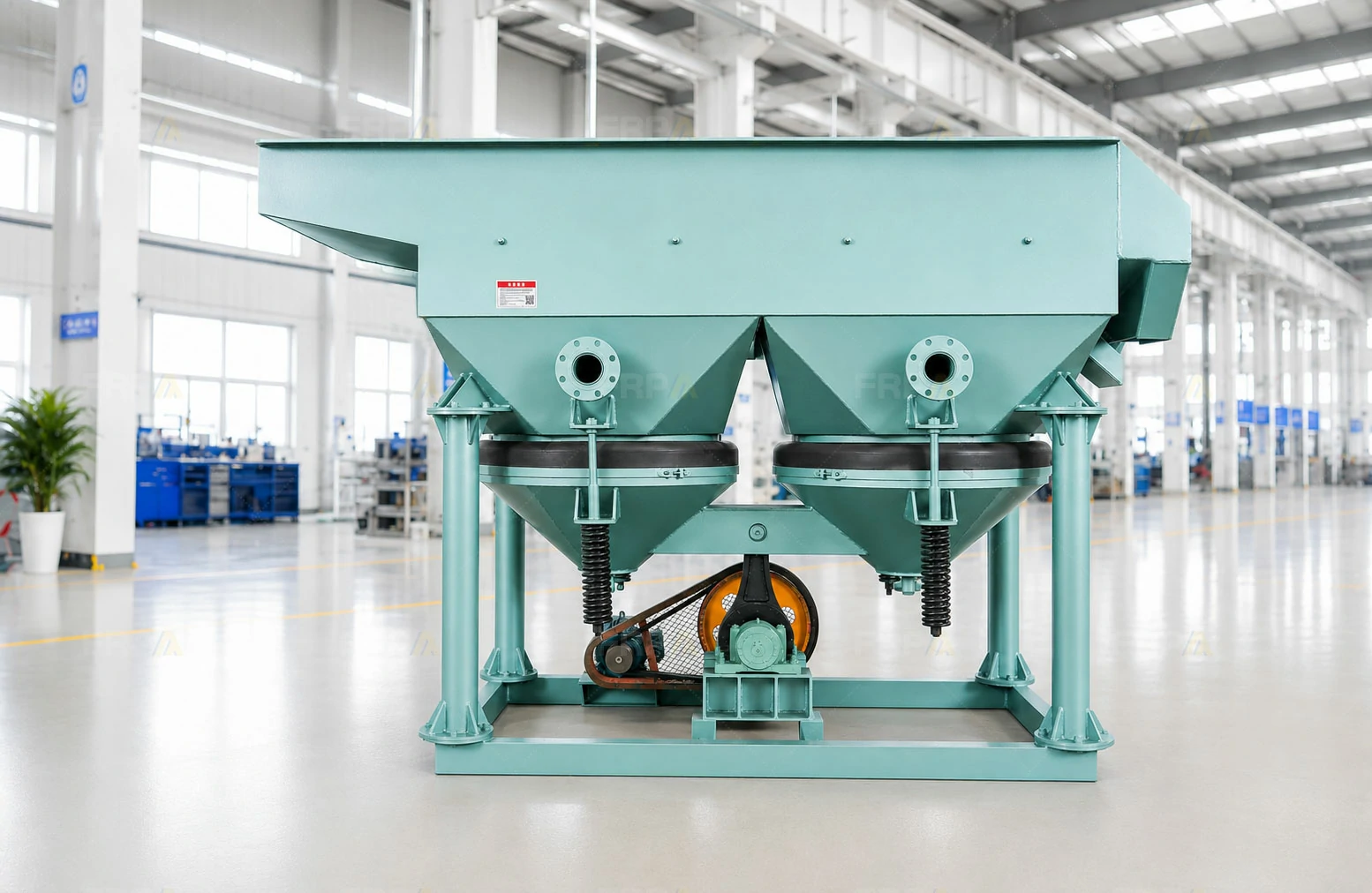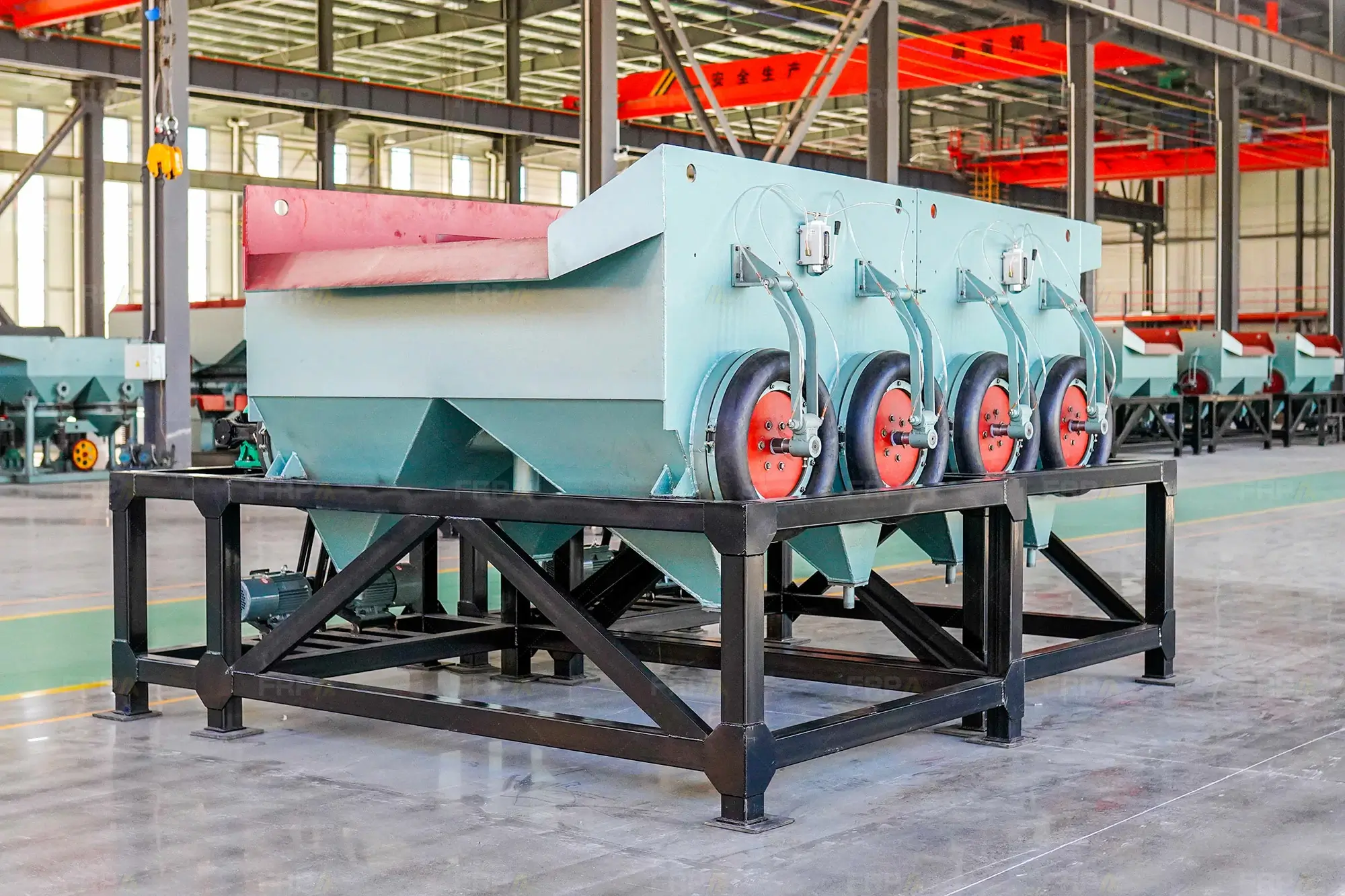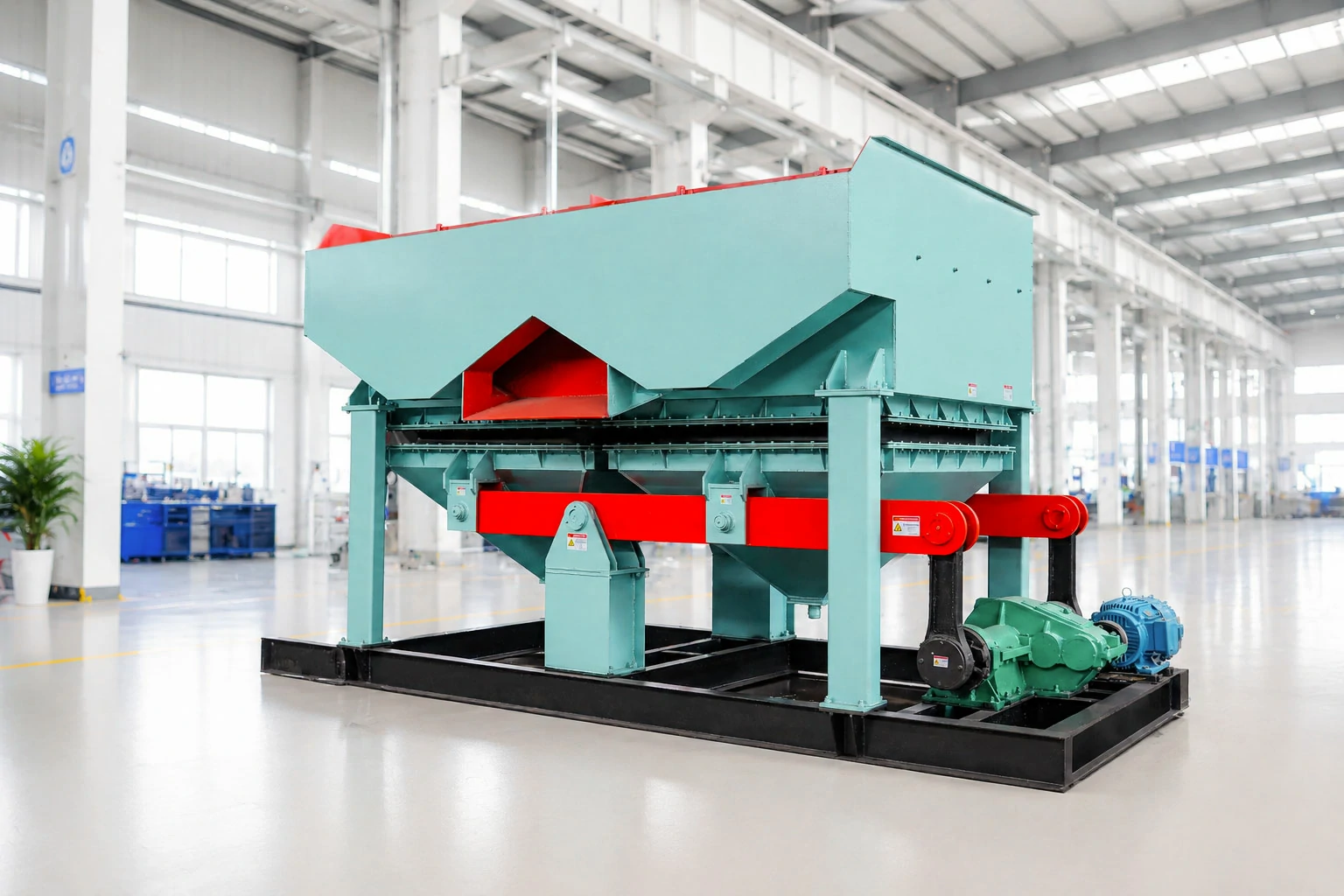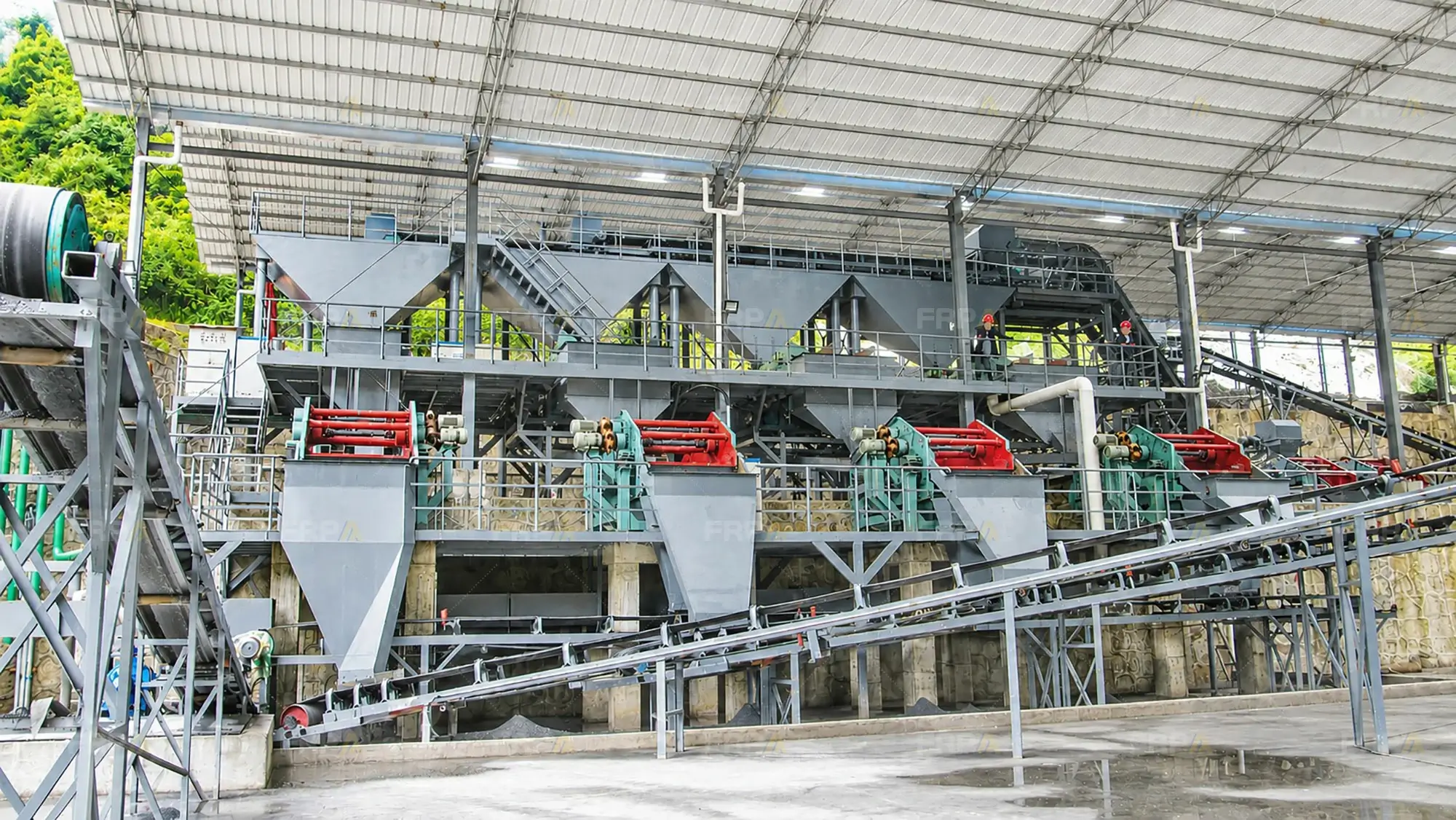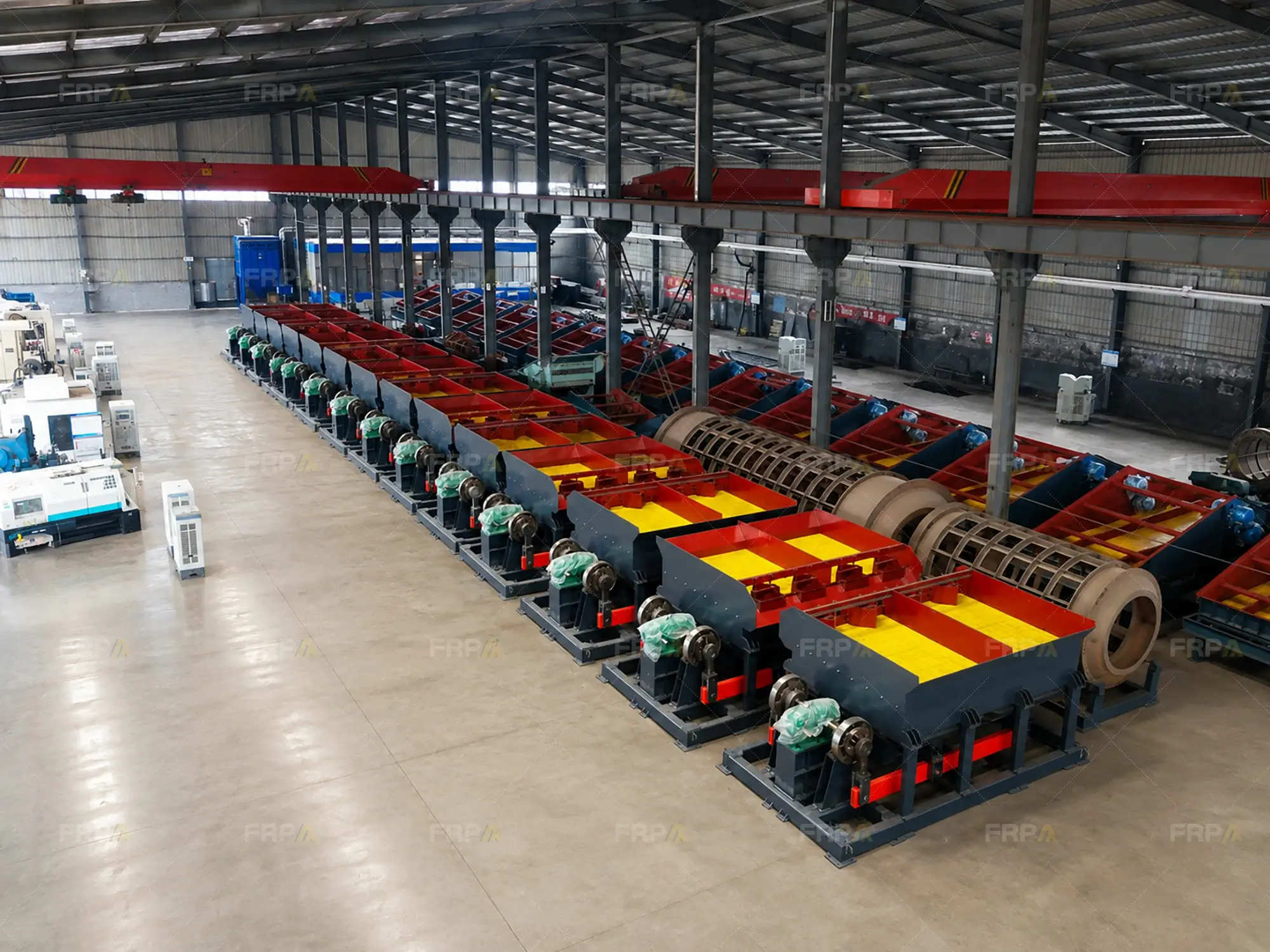





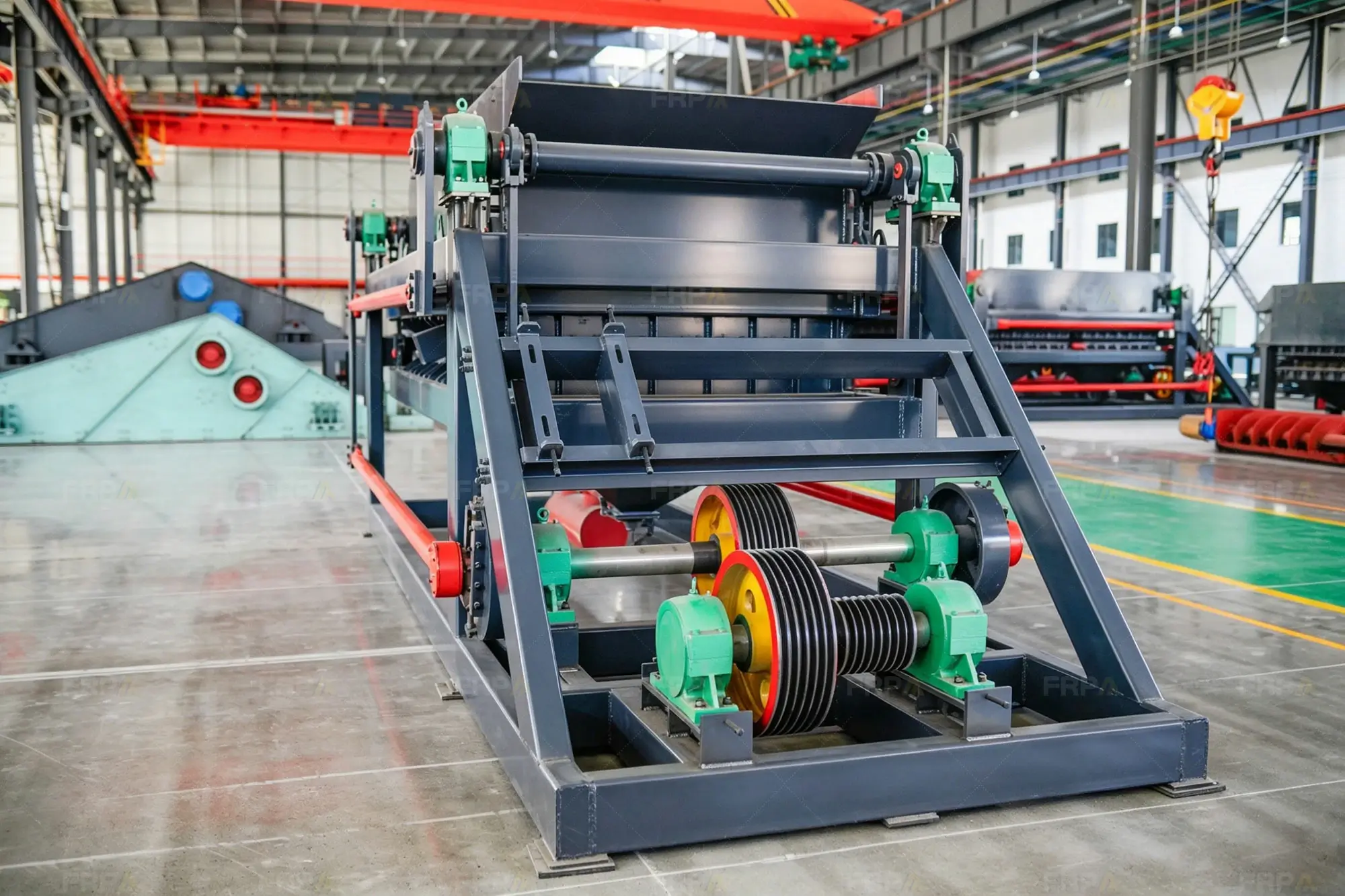
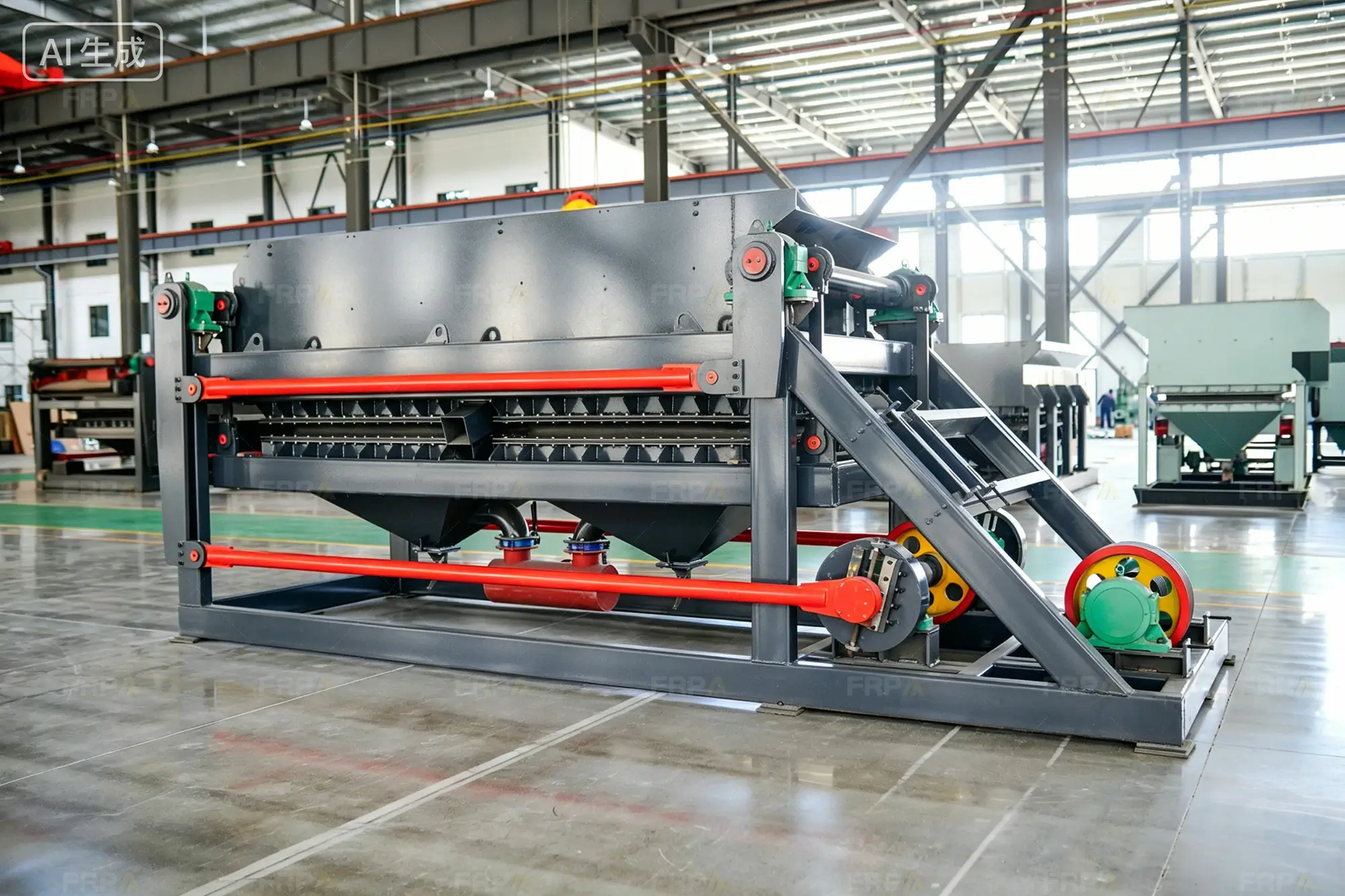
The FDD Compound Double-Action Jig Concentrator is a heavy-duty gravity separation equipment developed for wide particle size range feed separation. Traditional diaphragm jigs rely on a single pulsation chamber, while the FDD adopts a unique compound double-action structure, in which two jigging chambers move in opposite directions simultaneously.
This counter-motion structure generates a larger stroke and stronger pulsating water flow. For applications where conventional jigs may face limitations in stratifying wide size distribution feeds, the FDD maintains stable bed stratification and separation performance.
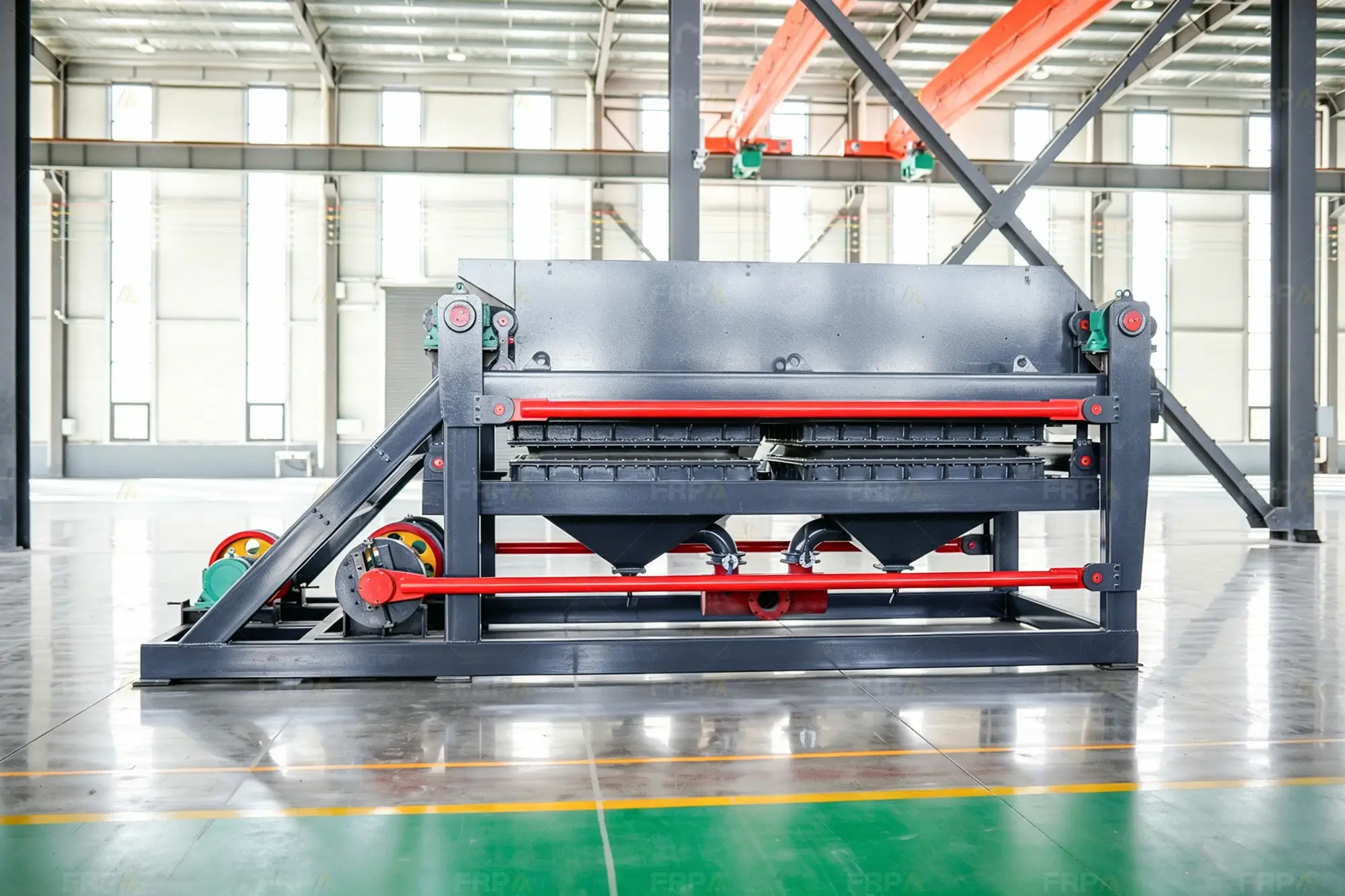
The FDD Series Compound Double-Action Jig separates minerals based on differences in specific gravity.
During operation, the upper cone and lower cone are connected by flexible rubber diaphragms to form sealed water chambers. Driven by the operating mechanism, the cones periodically expand and contract, generating a continuous and stable pulsating water flow within the jig chamber.
The pulsation acts on the mineral bed through the screen, causing the particles to repeatedly loosen, settle, and re-stratify. Under the downward water flow, high-density particles settle faster than low-density particles and gradually concentrate in the lower portion of the bed.
As stratification progresses, fine heavy minerals pass through the screen into the lower cone and are discharged through the lower concentrate outlet. Coarse heavy minerals form a concentrate layer above the screen and are discharged through the upper concentrate outlet, while low-density gangue and waste material are removed through the tailings outlet.
Through this continuous stratification process, the machine simultaneously recovers coarse and fine heavy minerals while rejecting waste material, achieving efficient gravity pre-concentration.
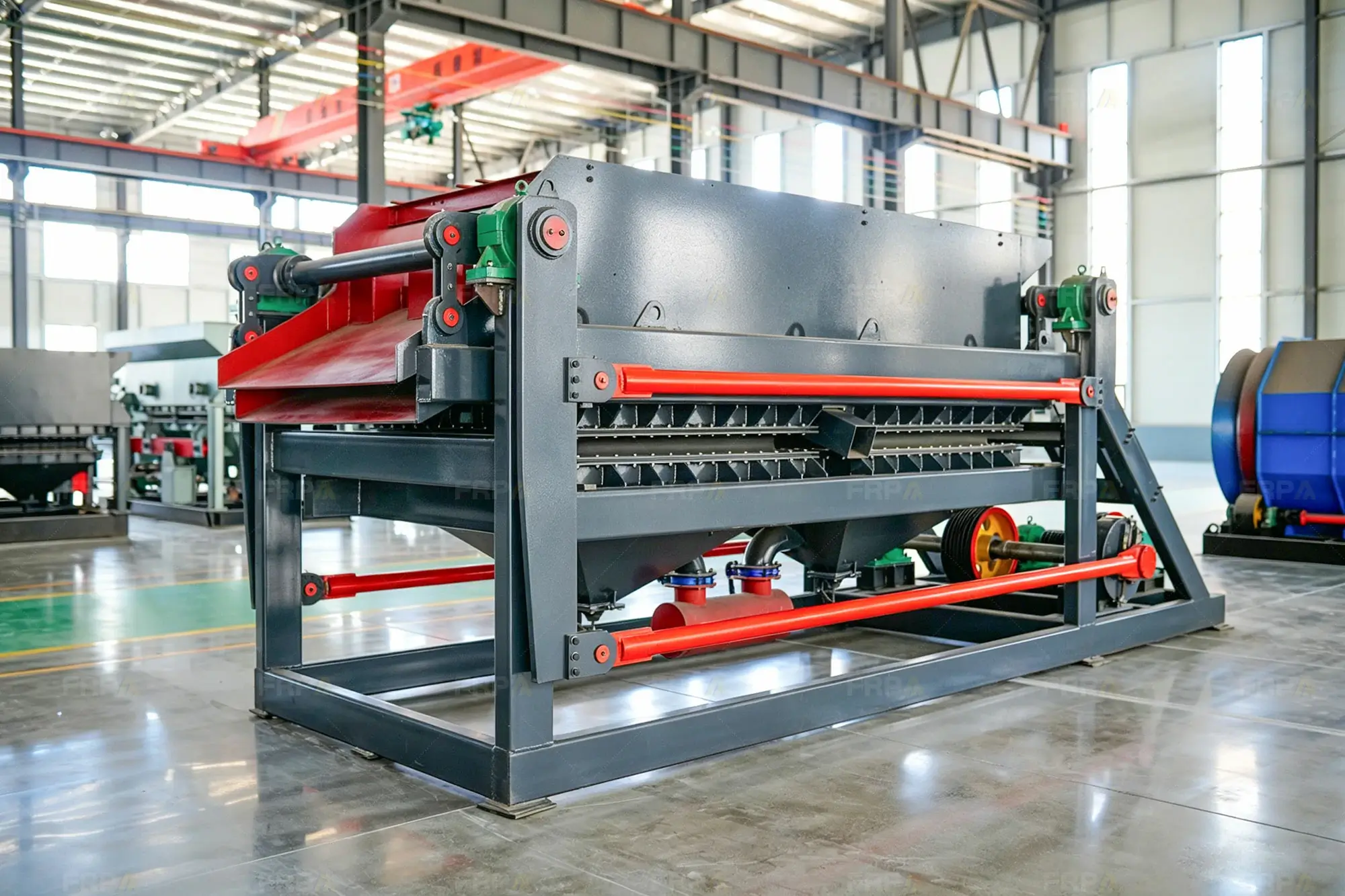
FAQ for FDD jig concentrator
We don't just deliver machines — we deliver assurance.
From installation to long-term service, we're by your side with ongoing support to keep your equipment running at its best.
| Model | Cross-Section Shape | Number of Chamber | Jigging Area (m²) | Stroke (mm) | Stroke Frequency (r/min) | Capacity (t/h) | Power (kW) |
|---|---|---|---|---|---|---|---|
| FDD4-2 | Rectangular | 2 | 4.5 | 0-80 | 0-170 | 40-50 | 18.5 |
Note: Specifications are subject to change without notice due to ongoing product improvement.
Have a question, need advice, or want to schedule an appointment? We're happy to assist with any inquiries you have about our equipment and system solutions.